Pocket German
German grammar
Short lessons on the grammar every learner trips over, from A1 to B1.
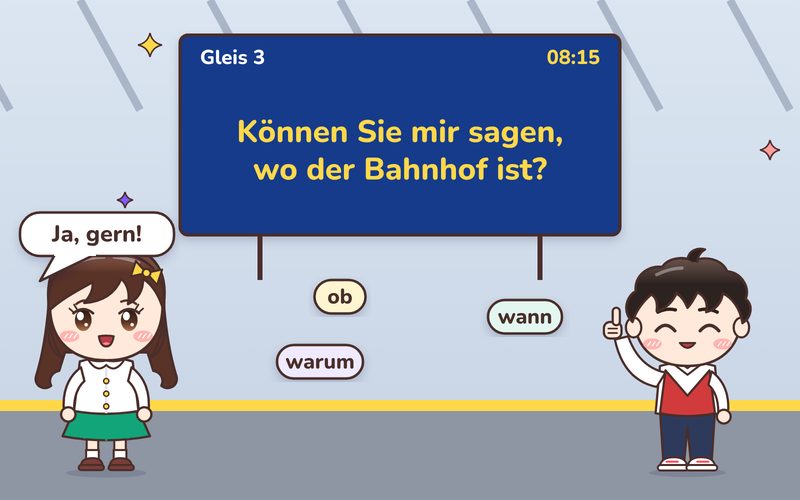
GrammarB1 Können Sie mir sagen, wo …? Asking politely with indirect questions\"Could you tell me where the station is?\" sounds more polite than \"Where's the station?\" German indirect questions start with a question word or ob, and the verb goes to the end. Polite question frames, how to use ob, wann and warum, and common mistakes.
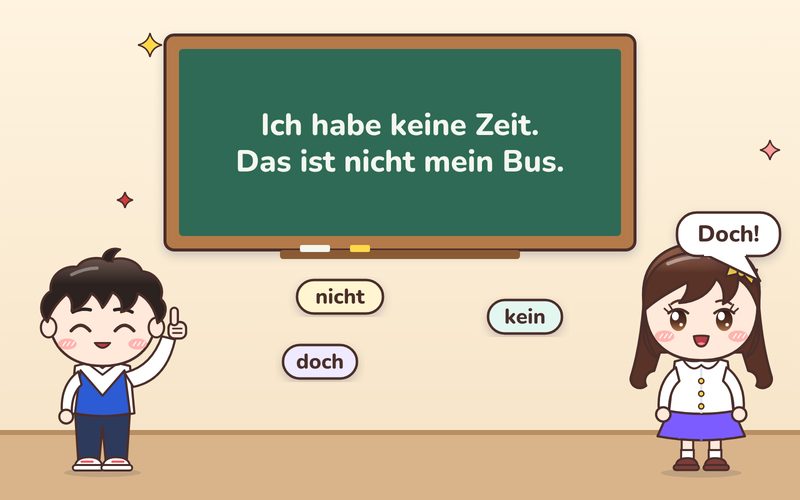
GrammarA2 nicht or kein? How to say no in GermanGerman has two main words for negation: kein before nouns, nicht for everything else. Where nicht goes in the sentence, and doch, the special answer that says 'yes, actually' to a negative question.
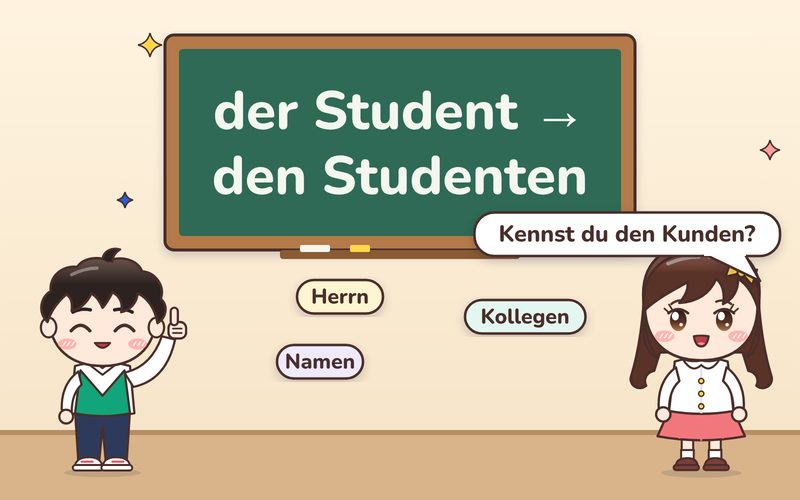
GrammarB1 den Studenten, dem Kunden: masculine nouns that add -n (the n-declension)Why does der Student become den Studenten? Some masculine nouns add -n or -en in every case except the nominative. How to spot these 'n-declension' nouns, special words like Herr and Name, and the most common mistakes.
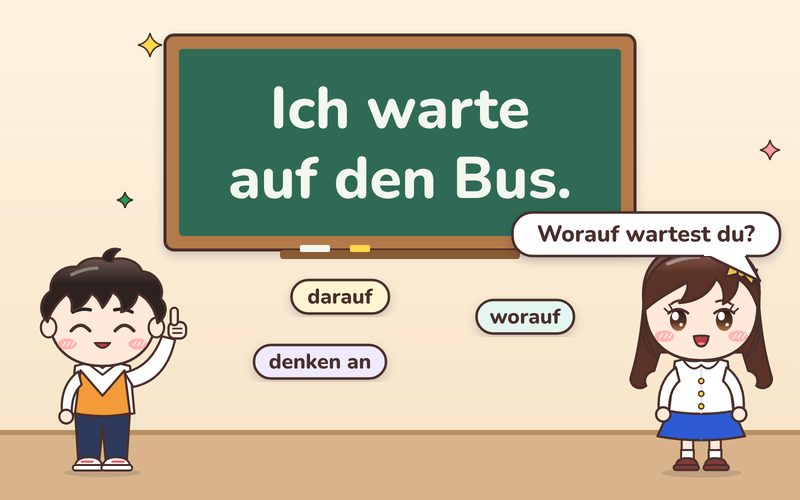
GrammarB1 warten auf, denken an: verbs with prepositions, plus darauf and woraufMany German verbs always come with a particular preposition. How to learn pairs like warten auf, denken an and sich kümmern um, and how the da-/wo- compounds (darauf, worauf) stand in for them.
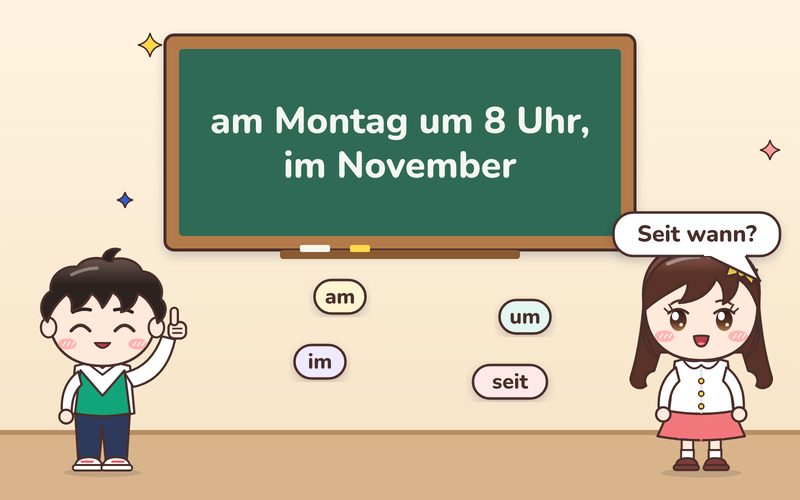
GrammarA2 am Montag, um 8 Uhr, im November: German time prepositions in one placeam, um, im, seit, vor, ab, bis, von … bis — all the prepositions you need to talk about dates and times in German. Which one goes with days, clock times and months, the difference between 'ago' and 'since', and example sentences for appointments and plans.
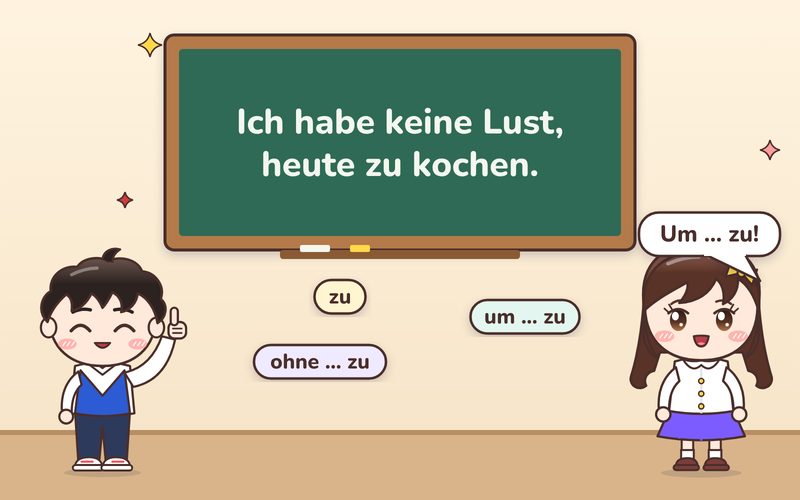
GrammarB1 Hast du Lust mitzukommen? zu + infinitive and um … zu, ohne … zu, statt … zuIch versuche, pünktlich zu sein. / Ich lerne Deutsch, um in Deutschland zu arbeiten. — the zu-infinitive is how German says \"to do\", \"doing\", \"in order to\", \"without …ing\" and \"instead of …ing\". Where zu goes, separable verbs, and why it never comes after modal verbs.
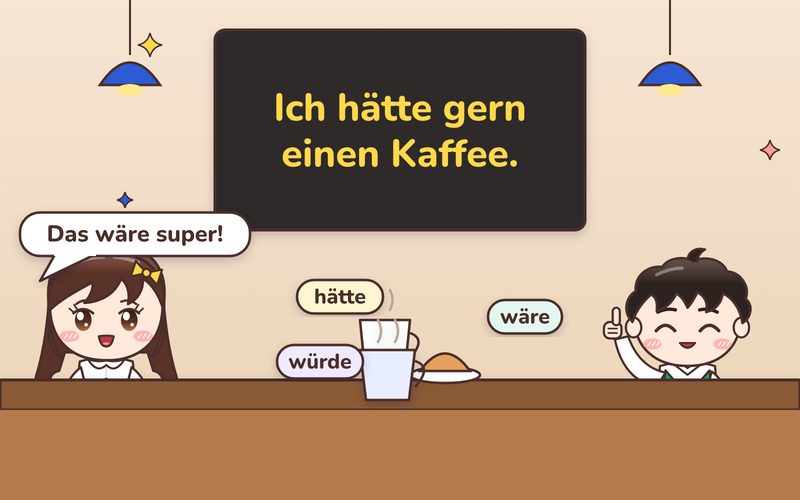
GrammarB1 Ich hätte gern …: the Konjunktiv II for polite requests and wishesIch hätte gern … at the bakery, Könnten Sie …? at the Amt, Wenn ich Zeit hätte … with friends — German uses the Konjunktiv II for polite requests and things that aren't real. würde + infinitive, the must-know hätte, wäre and könnte, wenn clauses and the past form.
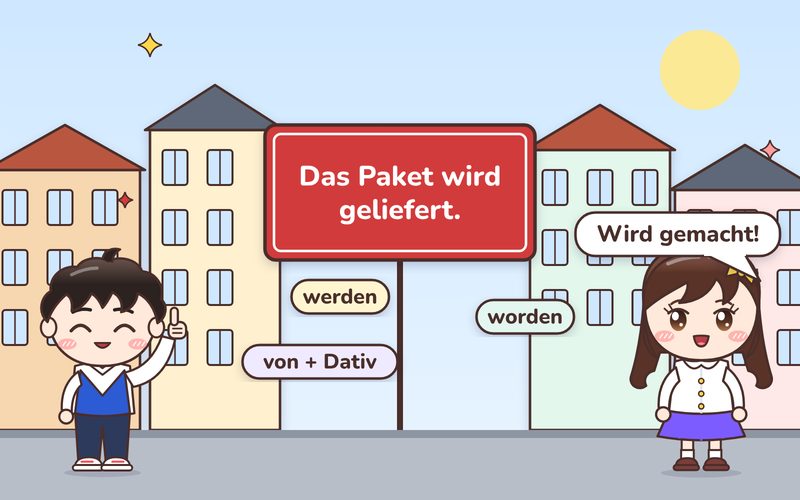
GrammarB1 Das Paket wird geliefert: the German passive, when what happens matters more than whoYour parcel is being delivered, the house was built in 1905 — when the action matters more than the person, German uses werden + past participle. Present, Präteritum, Perfekt (worden!), von + dative, the passive with modal verbs, and the 'state passive' with sein.
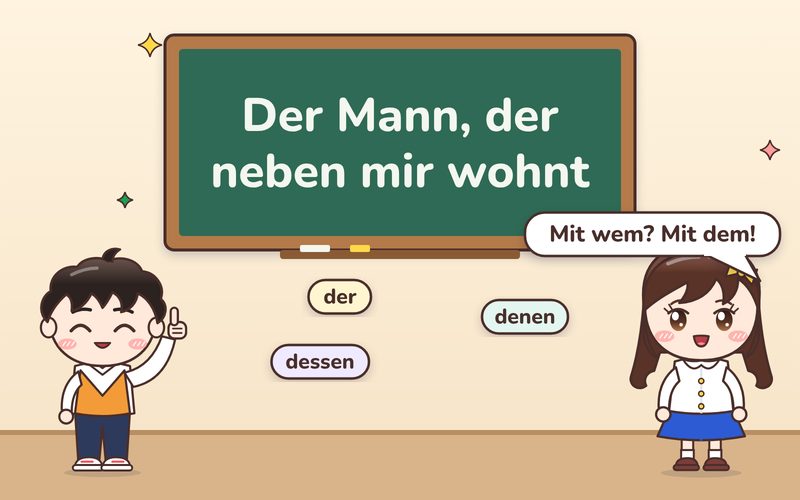
GrammarB1 Der Mann, der …: relative clauses in GermanRelative clauses add information to a noun — the man who lives next door, the book I bought. The der/die/das/denen/dessen table, the verb at the end, preposition + relative pronoun (mit der, für den), and was and wo.
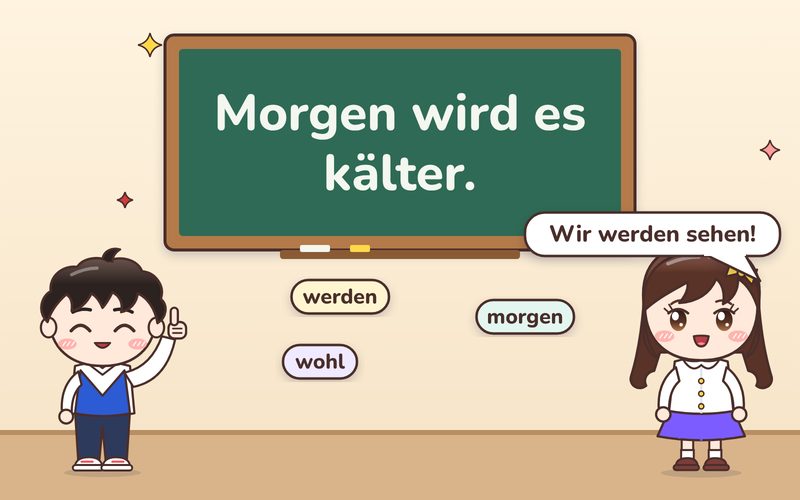
GrammarA2 Ich werde … or Morgen gehe ich …? Talking about the future in GermanGerman often uses the present tense for tomorrow's plans. So when do you need werden? Present tense + time phrase, werden + infinitive, and werden for "it'll probably be …" guesses.
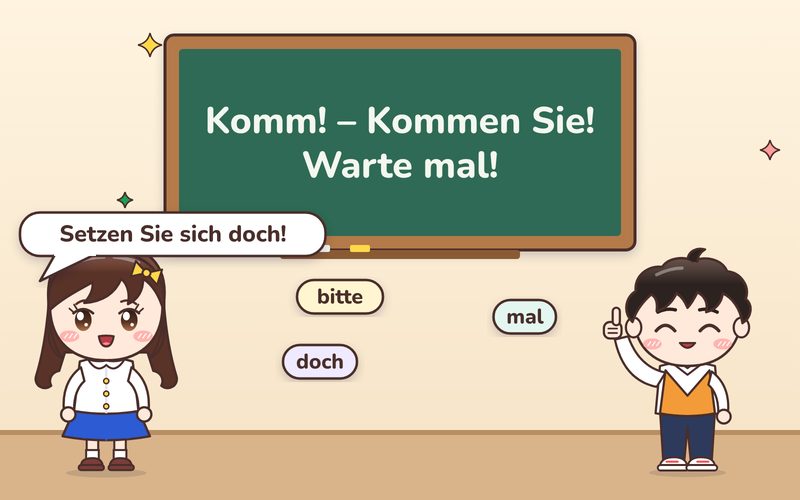
GrammarA2 Komm! Kommen Sie bitte! Asking and telling in German: the imperativeWarte mal! Nimm Platz! Rufen Sie mich bitte an! How to form the imperative for du, ihr and Sie, and how bitte, mal and doch make it sound friendly.
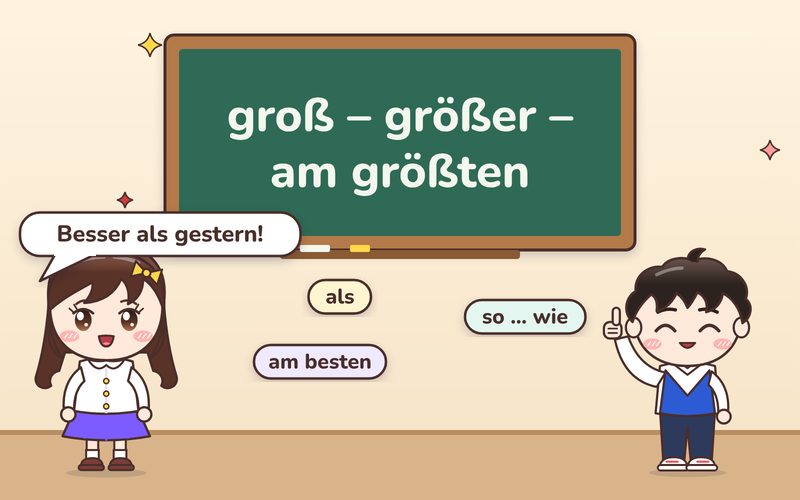
GrammarA2 Bigger, Biggest: German Comparatives and Superlativesbilliger als, am billigsten, so groß wie — how to compare things in German. The -er ending and als, am -sten, adjectives that take an umlaut (älter, größer) and the fully irregular gut–besser–am besten.
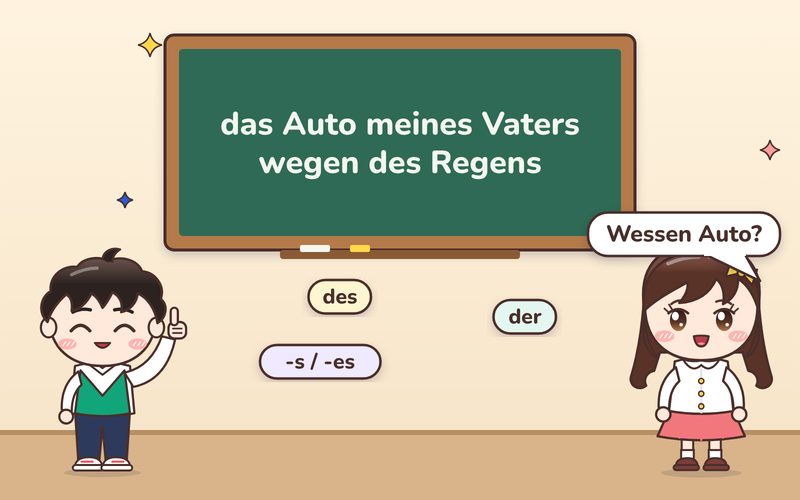
GrammarA2 The German genitivedas Auto meines Vaters, wegen des Regens — the genitive means 'of' and follows wegen, trotz and während. Here are des/der, the -s/-es ending, names, and the von + dative you hear in everyday speech.
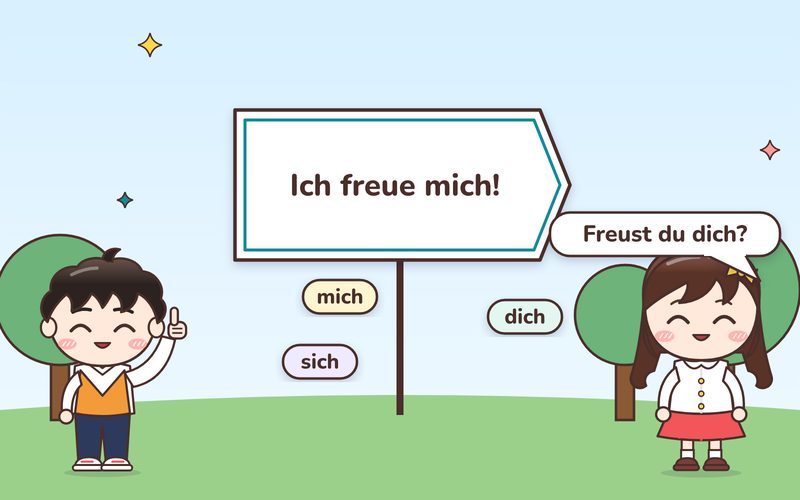
GrammarA2 Reflexive Verbs (sich freuen, sich erinnern)Why German says "Ich freue mich" and "Beeil dich!" – reflexive pronouns in the accusative and dative, where they go in the sentence, and the verbs that need them.
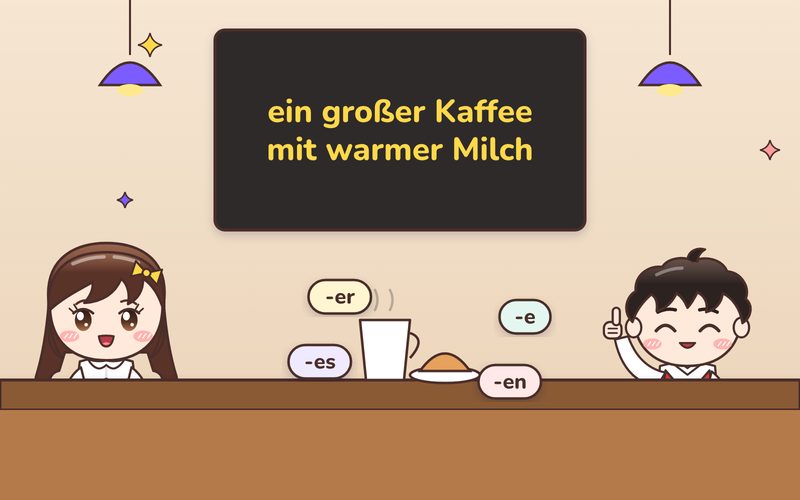
GrammarB1 Adjective endings: der gute, ein guter, guterGerman adjectives before a noun take endings like -e, -en, -er or -es. Three compact tables and one simple strategy make Adjektivdeklination manageable.
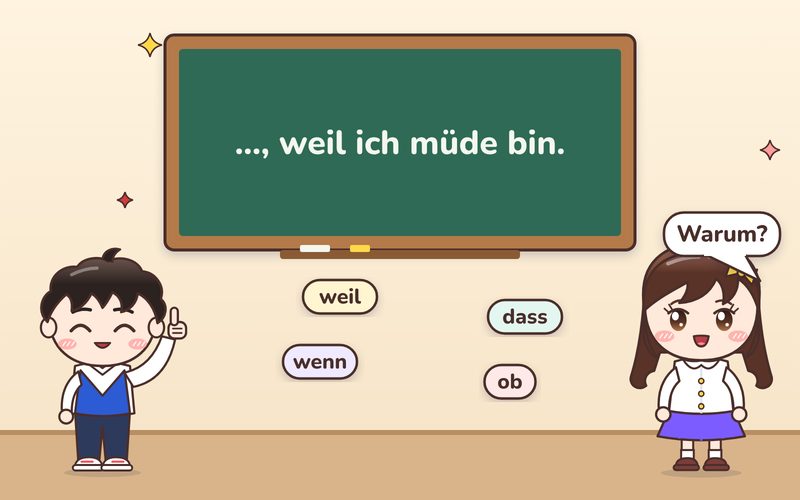
GrammarB1 Subordinate clauses: weil, dass, wenn, ob, obwohl, alsAfter weil, dass, wenn, ob, obwohl and als the conjugated verb jumps to the end of the clause. Learn the word order, the comma, and the difference between weil/denn and wenn/als.
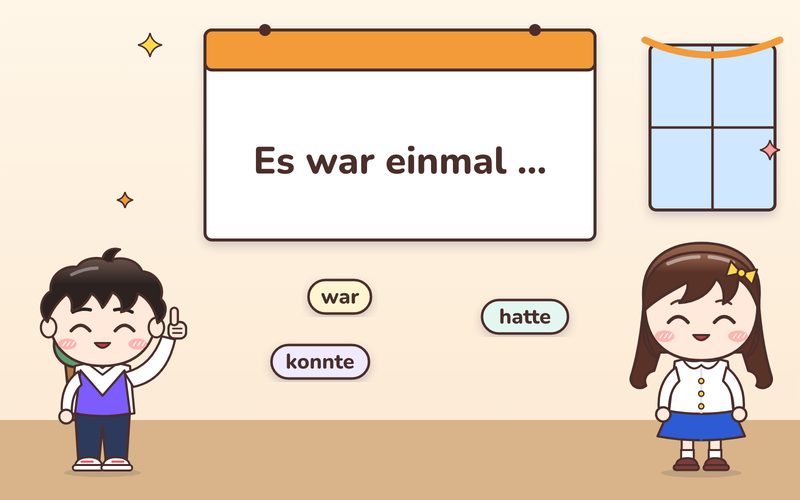
GrammarA2 Simple past in speech: ich war, ich hatte, ich konnteIn spoken German most verbs use the perfect, but sein, haben and the modal verbs prefer the simple past (Präteritum). Here are all the forms, plus es gab.
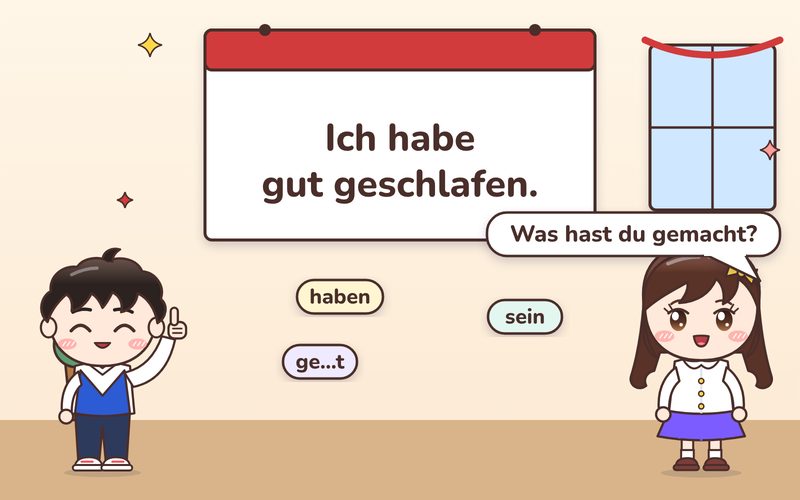
GrammarA2 The Perfekt – Talking About the PastHow to say what you did yesterday in German – haben or sein plus a participle at the end, when to use sein, and how participles are formed.
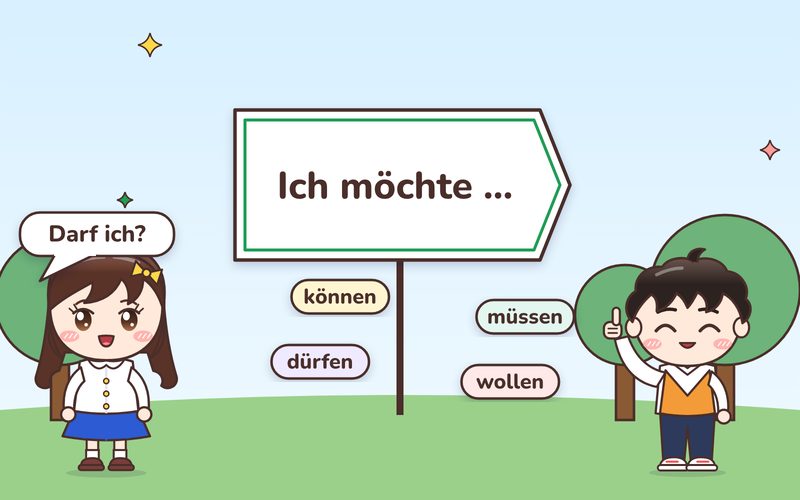
GrammarA1 Modal Verbs – können, müssen, dürfen & Co.Can, must, may, should, want, like – the six German modal verbs, their present-tense forms, why the second verb goes to the end, and the classic trap "muss nicht" vs. "darf nicht".
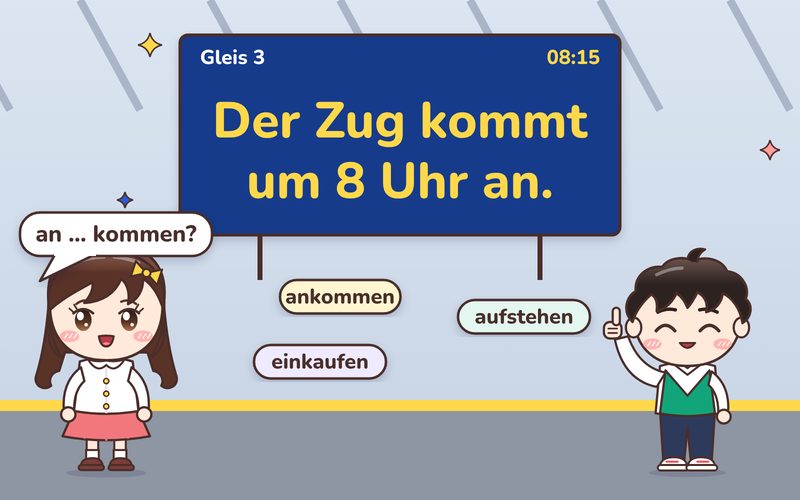
GrammarA1 Separable Verbs (anrufen, aufstehen)Why "anrufen" becomes "Ich rufe dich an": where the prefix of separable verbs goes in main clauses, with modal verbs, in subordinate clauses and in the perfect tense.
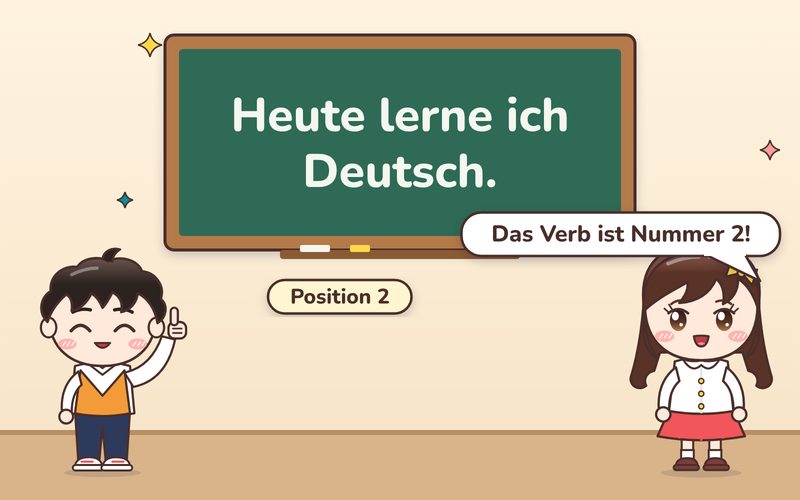
GrammarA1 German Word Order: The Verb in Second PlaceIn German statements the conjugated verb always comes second, in questions it moves to the front, and with modal verbs or the perfect the second verb goes to the very end. Here are the core rules with examples.
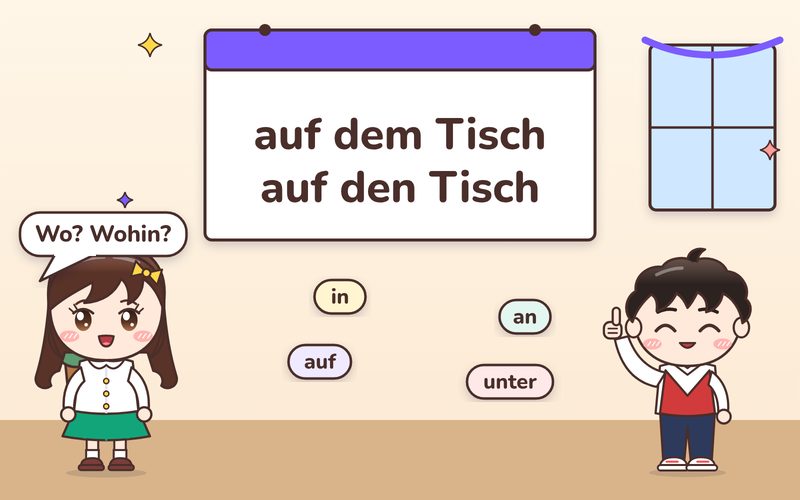
GrammarA2 Two-way prepositions: Wo? or Wohin?an, auf, in, unter and five more take the dative or the accusative. One question decides which: Wo? (where) or Wohin? (where to).
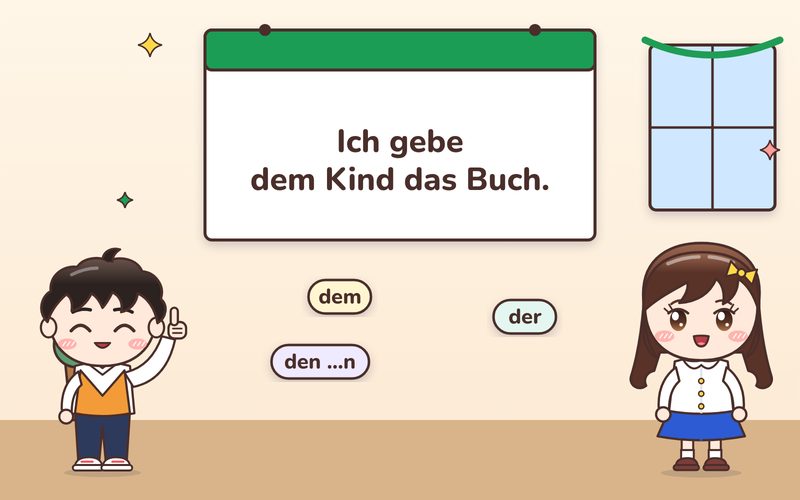
GrammarA2 The Dative CaseDem, der, mir, ihm — learn when German uses the dative case: for the person who receives something, after aus, bei, mit, nach, seit, von, zu, and with verbs like helfen and gefallen.
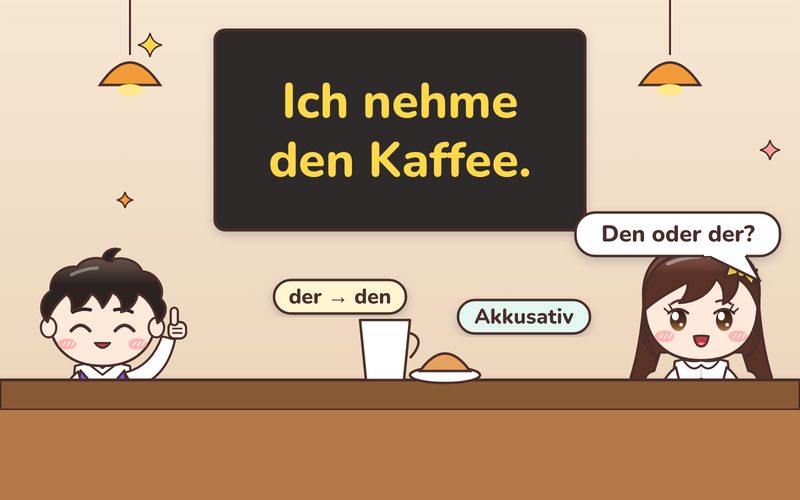
GrammarA1 Nominative vs. AccusativeWho does it and what gets it — the accusative marks the direct object, and at A1 only the masculine article changes (der → den, ein → einen). Plus the object pronouns mich, dich, ihn.
GrammarA1 der, die, das: how to guess a noun's genderEvery German noun is der, die or das. These endings and simple rules let you guess the right article much more often.