Your first Korean winter: how to use the boiler without a huge heating bill
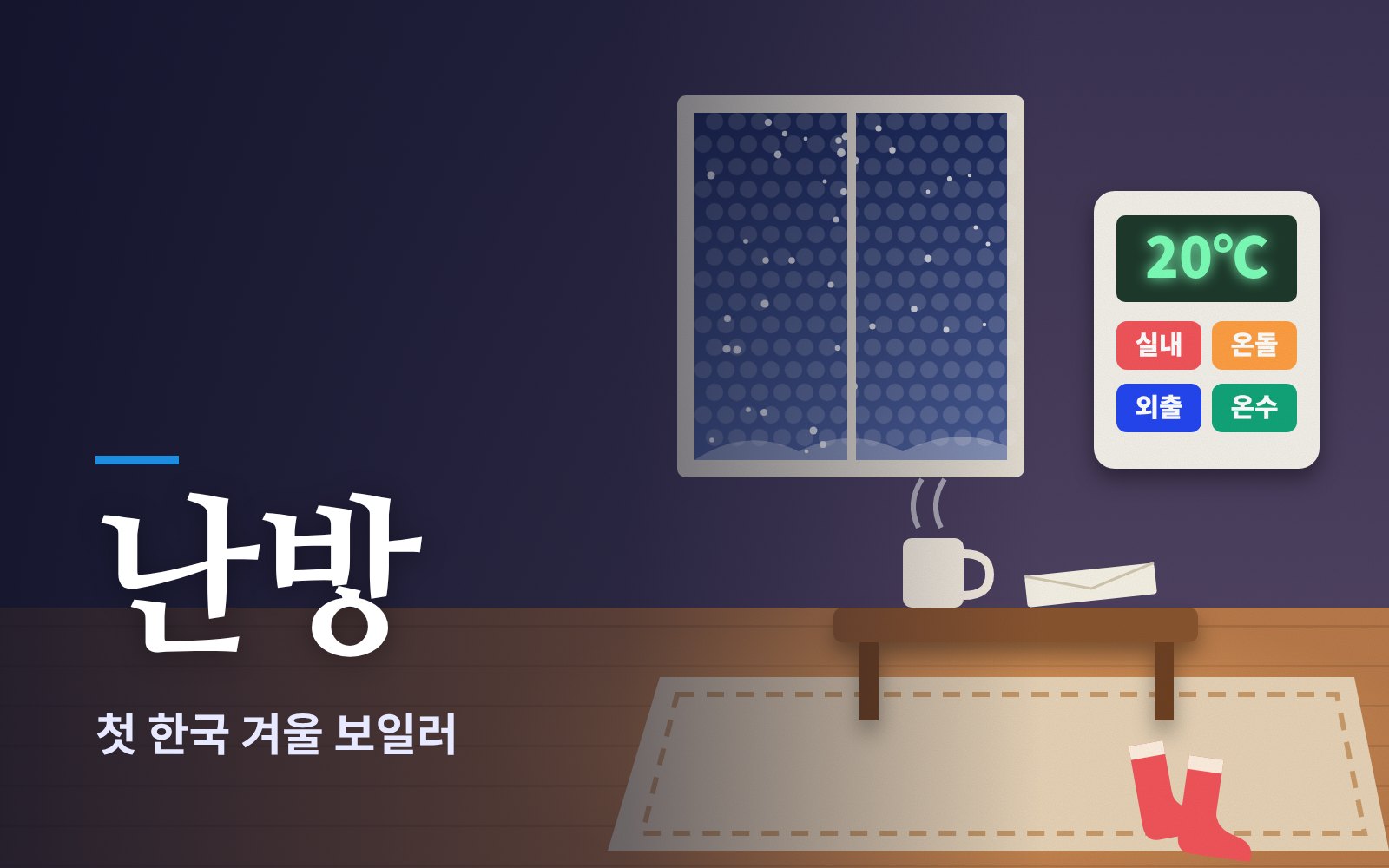
Korean winters are cold, but Korean homes can be wonderfully warm, thanks to 온돌 (ondol), heating that warms the floor from below. In most homes today, hot water from a gas 보일러 (boilleo), boiler, runs through pipes under the floor. The catch for newcomers is the control panel on the wall, usually in Korean only, and the bill that arrives a month later. Here is how it works, as of October 2026.
Know your heating type
First find out which kind of 난방 (nanbang), heating, your home has:
- 개별난방 (gaebyeollanbang) – individual heating: your own gas boiler. Most one-rooms and villas use this, and you get a separate city gas bill, 도시가스 (dosigaseu) 요금 (yogeum), based on how much gas you use.
- 지역난방 (jiyeongnanbang) or 중앙난방 (jungangnanbang) – district or central heating, common in apartment complexes. Heating is added to your monthly 관리비 (gwallibi), maintenance fee.
Ask your landlord or the building office which one you have before winter starts.
The control panel, button by button
- 실내 (sillae) – "indoor" mode: the boiler aims for the room temperature you set.
- 온돌 (ondol) – "floor" mode: you set the temperature of the heating water instead.
- 외출 (oechul) – "away" mode: minimal heat to stop pipes from freezing. It is not the same as off.
- 예약 (yeyak) – timer: the boiler runs at set intervals.
- 온수 (onsu) – hot water for the tap and shower.
Which is cheaper, indoor or floor mode? According to a guide in the Segye Ilbo, it depends on your home: indoor mode suits well-insulated rooms, while floor mode suits draughty homes and people who spend a lot of time sitting on the floor.
Keeping the bill down
Korea's government asks households to keep indoor heating at 20 degrees Celsius. In its winter energy campaign last December, it estimated that this saves an average household about 5,150 won a month, and that warm clothes like thermal underwear and sleep socks save about 10,300 won more. Other tips from the same campaign and from Korean press guides:
- Turning the temperature down by 1 degree cuts energy use by about 7%.
- Cover windows with bubble wrap, 뽁뽁이 (ppokppogi), and use curtains and rugs.
- Set hot water to 40–50 degrees, and turn the tap back to cold after use so the boiler doesn't fire up for nothing.
- Going out for the day? Lower the temperature by 1–2 degrees rather than switching the boiler off; reheating a cold home uses a lot of energy. Use away mode only for longer trips. Korea District Heating Corporation recommends it for absences of three days or more.
Electric heaters and electric blankets are not a free alternative. Home electricity in Korea has progressive pricing, 누진제 (nujinje), so heavy use can push you into a more expensive tier. Switch electric blankets off when you go out and don't use them folded.
Frozen pipes and broken boilers
Burst or frozen pipes, 동파 (dongpa), are a real risk in a cold snap. When you leave home, keep the boiler plugged in and leave the gas valve and the floor-heating valves open, so its freeze protection can work. On the coldest nights, Seoul advises leaving a tap dripping slightly while you are away. If the boiler breaks or a pipe freezes, tell your landlord right away and keep photos and messages. Major repairs are usually the landlord's job, but check your lease.
If you smell gas, turn the boiler off, close the gas valve, open the windows and call your gas company.
Korean you can use
| Korean | Romanization | Meaning |
|---|---|---|
| 난방 | nanbang | heating |
| 보일러 | boilleo | boiler |
| 실내 온도 | sillae ondo | indoor temperature |
| 외출 | oechul | going out; away mode |
| 온수 | onsu | hot water |
| 관리비 | gwallibi | maintenance fee |
| 동파 | dongpa | frozen or burst pipes |
| 누진제 | nujinje | progressive (tiered) pricing |
Useful sentence: 보일러가 고장 났어요 (boilleoga gojang nasseoyo) – "The boiler is broken." Send it to your landlord with a photo of the error code.
Sources: Korea Policy Briefing via Daum – Winter energy saving campaign (Korean), Segye Ilbo – Indoor vs ondol mode and district heating tips (Korean), LACHA Korea Guide – Your first Korean winter