Homigot Sunrise Festival: greeting 2027 at Korea's 'tiger's tail' cape in Pohang, 31 December to 1 January
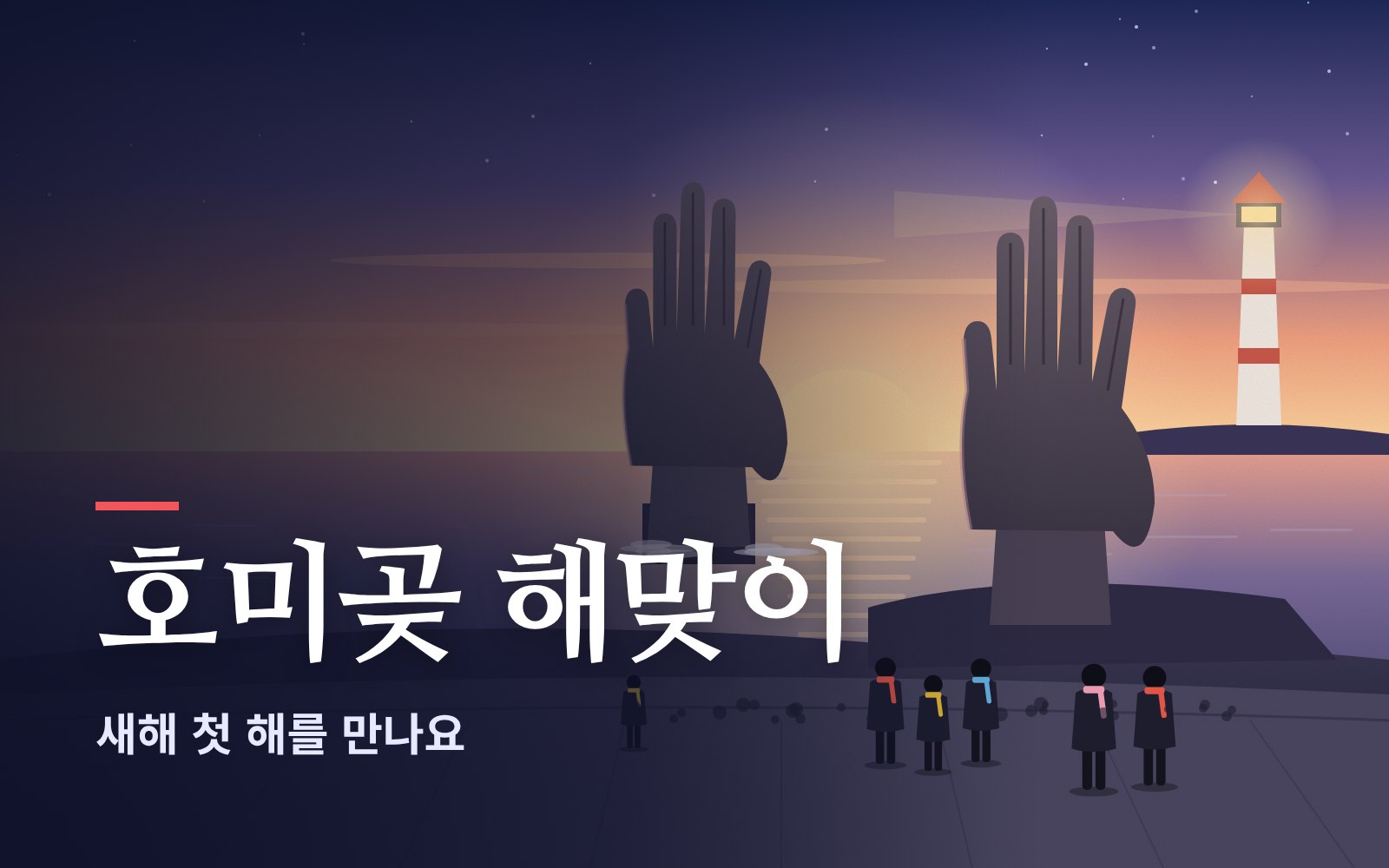
Every year, crowds of Koreans travel to the east coast to see the first sunrise of the new year. One of the best-known places is 호미곶 (Homigot), a cape in the city of Pohang, North Gyeongsang. The Korea Tourism Organization's winter-festival guide, last updated in November 2026, lists the Homigot Sunrise Festival (호미곶 해맞이 축제) for 31 December 2026 to 1 January 2027, at Homigot Sunrise Square. The guide marks some other festivals as tentative, but not this one. As of November 2026, I could not find a programme for the 2027 edition, so this guide uses last year's for an idea of what to expect.
Why Homigot
The name means "tiger's tail cape": 호미 (homi) is tiger's tail and 곶 (got) is a cape. According to the Korea JoongAng Daily, the area was called Janggi-got under Japanese rule, and the current name was coined in December 2001. On 1 January 2000, a national millennium festival was held here because of the scenery, and the paper says more than a million people have come on New Year's Day since then.
The cape's best-known landmark is the Hands of Harmony, a stone-and-bronze statue of a pair of hands, one rising from the sea and the other from the land. The same article says it was funded by the head of the millennium committee.
What last year's festival looked like
The 28th festival ran from 31 December 2025 to 1 January 2026, hosted by Pohang City and the Pohang Cultural Foundation. According to Asia Economy, the programme included:
- Afternoon, 31 December: hands-on programmes begin.
- Around 11 p.m.: a band opens the night, followed by a countdown and fireworks, and a media-facade show projected on the Homigot lighthouse.
- All night: warm shelter booths, food trucks, photo zones, fortune-telling and New Year's rice cake soup.
- Early 1 January: a morning performance, the announcement of a four-character idiom for the year, and a tightrope performance as the sun came up.
Asia Economy reported that the sun rose at about 7:33 a.m. on 1 January 2026 and that more than 50,000 people gathered at the square. Pohang deployed 649 safety staff, set up large tents and cold-weather shelters, and ran a control tower with CCTV. The details for 2027 may change, so check Pohang City and the Pohang Cultural Foundation before you go.
Planning your night
- Dress for the sea wind. It is the coldest part of the trip, so bring layers, a hat and gloves.
- Expect crowds. Last year's figure shows how busy it gets. Last year Pohang posted traffic staff at main junctions and ran a traffic information centre, so plan how you will arrive and leave, and check the city's notices.
- Weather decides the view. A cloudy sky can hide the sunrise, so check the forecast for the morning of 1 January.
Korean for the first sunrise
The key word is 해맞이 (haemaji [해마지]), literally "meeting the sun". It is 해 (hae), sun, plus 맞이 (maji), welcoming. You will also see 일출 (ilchul), sunrise, on signs and maps.
| Korean | Romanization | Meaning |
|---|---|---|
| 해맞이 | haemaji [해마지] | greeting the sunrise |
| 일출 | ilchul | sunrise |
| 호미곶 | Homigot | Homigot (cape) |
| 곶 | got [곧] | cape |
| 등대 | deungdae | lighthouse |
| 소원 | sowon | wish |
| 떡국 | tteokguk [떡꾹] | rice cake soup |
| 불꽃놀이 | bulkkonnori [불꼰노리] | fireworks |
| 포항 | Pohang | Pohang |
N에서 해맞이를 하다 – to watch the sunrise at N. For example: 호미곶에서 해맞이를 할 거예요. (Homigoteseo haemajireul hal kkeoyeyo. [호미고세서 해마지를 할 꺼예요]) – I'm going to watch the sunrise at Homigot. And to make a wish: 소원을 빌어요. (Sowoneul bireoyo. [소워늘 비러요]) – I make a wish.
Sources: Korea Tourism Organization – 11 winter festivals in Korea, 2026–2027, Asia Economy – Homigot Korean Ethnic Sunrise Festival programme, 29 December 2025, Asia Economy – Homigot first sunrise, 1 January 2026, Korea JoongAng Daily – Seaside serenity in Pohang