Gyeongbokgung and Bukchon in one day
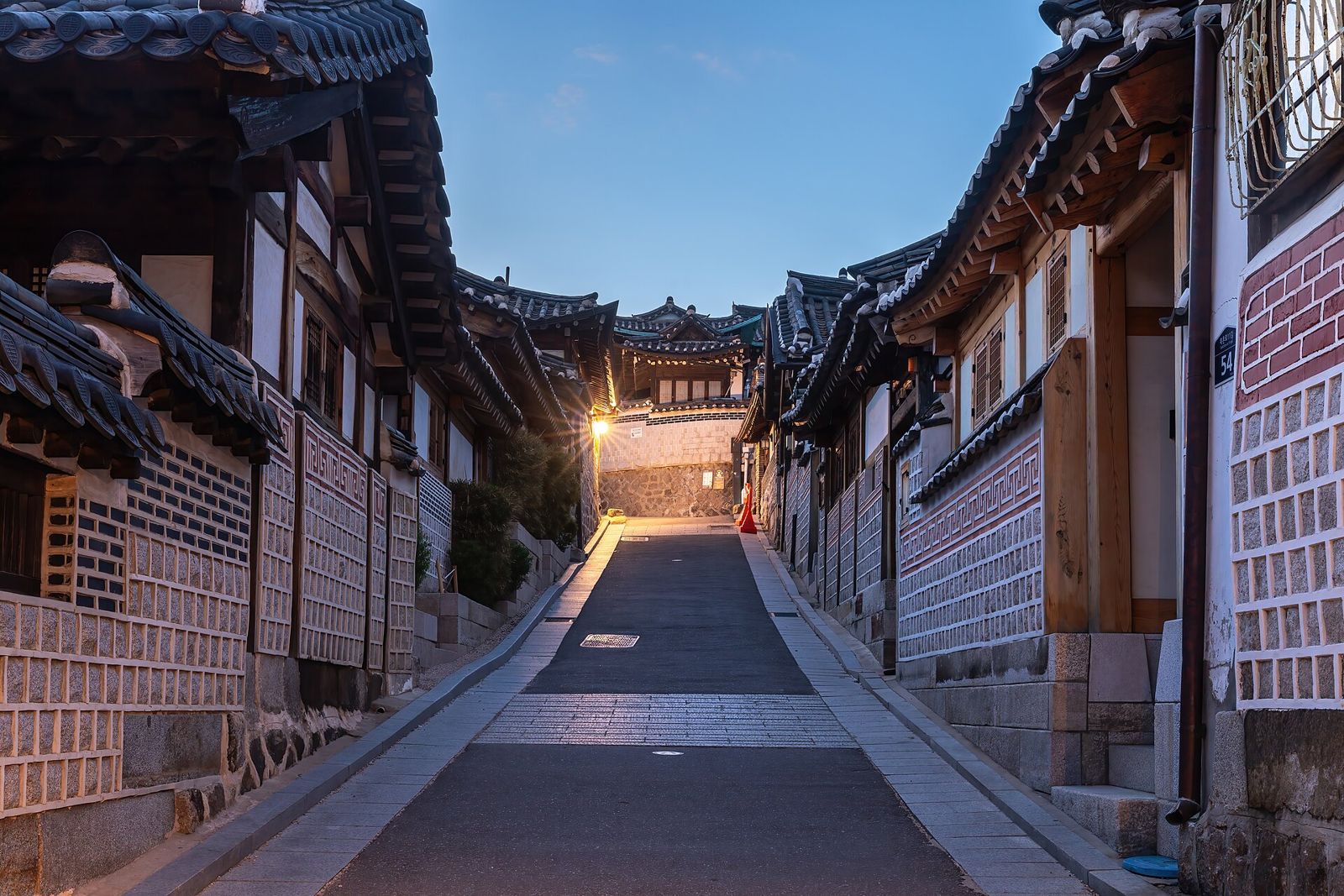
Basile Morin / CC BY-SA 4.0 (Wikimedia Commons)
Gyeongbokgung Palace and Bukchon Hanok Village sit next to each other in central Seoul, so you can easily see both in one day on foot. The trick is timing. The palace closes on Tuesdays, and part of Bukchon is closed to tourists in the early morning and the evening. Here is a route that works, with details checked as of October 2026.
Morning: Gyeongbokgung Palace
경복궁 (Gyeongbokgung) was the main royal palace of the Joseon dynasty. Take Line 3 to Gyeongbokgung Station, or walk up from Gwanghwamun Station on Line 5, and enter through the great gate, 광화문 (Gwanghwamun).
Opening hours (closed every Tuesday):
- March–May and September–October: 9:00–18:00
- June–August: 9:00–18:30
- November–February: 9:00–17:00
Last entry is one hour before closing. Adult admission is 3,000 won. The Korea Heritage Service has said new fees will apply from January 2027, so expect a change next year. Entry is free if you wear a 한복 (hanbok), traditional Korean clothing, and for foreign visitors aged 18 and under or 65 and over.
Tip: Arrive just before 10:00 to watch the Royal Guard Changing Ceremony, 수문장 교대의식 (sumunjang gyodae uisik), at Gwanghwamun. It runs at 10:00 and 14:00 and takes about 20 minutes. It isn't held on Tuesdays, when the palace is closed.
Inside, don't miss:
- 근정전 (Geunjeongjeon), the throne hall, where state ceremonies were held
- 경회루 (Gyeonghoeru), the banquet pavilion standing on stone pillars in a pond
- 향원정 (Hyangwonjeong), a small pavilion on an island near the back of the grounds
Allow two to three hours. The National Folk Museum of Korea is on the palace grounds near the east side if you want to see how ordinary people lived.
Lunch: Samcheong-dong
Leave by the east gate and walk into 삼청동 (Samcheong-dong). The streets between the palace and Bukchon are full of small restaurants, cafés and galleries. It is a good place to sit down before the hills of Bukchon.
Afternoon: Bukchon Hanok Village
북촌 (Bukchon) means "northern village." It is a hillside neighbourhood of 한옥 (hanok), traditional houses with tiled roofs and wooden frames. Unlike a folk village, it is a real residential area: people live, cook and sleep in these houses.
That is why Seoul has made Bukchon a special management area. As of October 2026, these rules apply:
- In the red zone, centred on Bukchon-ro 11-gil (the famous sloping street of hanok roofs you see in photos), tourists may visit only from 10:00 to 17:00.
- Sightseeing outside those hours, including taking photos or hanging around, can bring a fine of 100,000 won after a warning from patrol staff.
- Other parts of Bukchon are open, but signs ask visitors to keep their voices down.
So plan to reach Bukchon-ro 11-gil by about 15:00 at the latest. Anguk Station (Line 3) is the nearest station if you are coming separately.
Bukchon manners: you will see signs saying 조용히 해 주세요 (joyonghi hae juseyo), "Please be quiet." Don't open gates, sit on doorsteps or photograph through windows. If a street looks like someone's front yard, it probably is.
Evening: wind down nearby
When the red zone closes, walk south towards Insadong for tea and craft shops, or head back to Gwanghwamun Square. The palace walls look lovely at dusk from the outside, even after closing time.
A few practical tips
- Shoes: Bukchon is steep, with stone steps. Wear comfortable shoes, especially if you rent a hanbok.
- Weather: in late October and November the palace trees turn red and yellow, but mornings are cold. Bring a layer.
- Tuesdays: Gyeongbokgung is closed, so swap in Changdeokgung, which closes on Mondays instead.
Korean you can use
| Korean | Romanization | Meaning |
|---|---|---|
| 한옥 | hanok | traditional Korean house |
| 한복 | hanbok | traditional Korean clothing |
| 매표소 | maepyoso | ticket office |
| 입장료 | ipjangnyo | admission fee |
| 몇 시까지 해요? | myeot sikkaji haeyo? | Until what time are you open? (polite) |
| 사진 찍어도 돼요? | sajin jjigeodo dwaeyo? | May I take a photo? (polite) |
| 조용히 해 주세요 | joyonghi hae juseyo | Please be quiet |
| 골목 | golmok | alley, side street |
One palace, one village, one walk: it's an easy day, and one of the best introductions to old Seoul.