Read hangul in an hour: the 24 letters and how syllables are built
hyolee2 / CC BY-SA 3.0 (Wikimedia Commons)
Korean looks like a wall of little boxes at first, but those boxes are made from a small set of letters. 한글 (hangeul) – the Korean alphabet – was designed to be easy to learn. It was created under King Sejong and published in 1446 as 훈민정음 (Hunminjeongeum), "the correct sounds for teaching the people". Give it an hour, and you'll be sounding out signs and menus.
The 14 basic consonants
Several consonant shapes are simple pictures of the mouth: ㄱ shows the back of the tongue touching the roof of the mouth, ㄴ the tongue tip touching behind the teeth, ㅁ the closed lips. Extra strokes add a puff of air: ㄱ → ㅋ, ㄷ → ㅌ, ㅂ → ㅍ, ㅈ → ㅊ.
| Letter | Sound | Letter | Sound |
|---|---|---|---|
| ㄱ | g / k | ㅇ | silent at the start, ng at the end |
| ㄴ | n | ㅈ | j |
| ㄷ | d / t | ㅊ | ch |
| ㄹ | r / l | ㅋ | k (with a puff of air) |
| ㅁ | m | ㅌ | t (with a puff of air) |
| ㅂ | b / p | ㅍ | p (with a puff of air) |
| ㅅ | s | ㅎ | h |
The plain consonants ㄱ, ㄷ, ㅂ and ㅈ sit between English "g/k", "d/t", "b/p" and "j/ch". At the start of a word they sound closer to k, t, p and ch; between vowels they soften to g, d, b and j. That's why 김치 (gimchi) – kimchi – is spelled with g in official romanization but sounds like "kimchi" to English ears.
The 10 basic vowels
Vowels are built from three ideas: a dot or short stroke (the sky), a horizontal line ㅡ (the earth) and a vertical line ㅣ (a person). Adding a second short stroke adds a "y" sound.
| Vowel | Sound | Vowel | Sound |
|---|---|---|---|
| ㅏ | a (as in "father") | ㅗ | o |
| ㅑ | ya | ㅛ | yo |
| ㅓ | eo (like "uh" with rounded lips) | ㅜ | u (as in "moon") |
| ㅕ | yeo | ㅠ | yu |
| ㅣ | i (as in "ski") | ㅡ | eu (say "ee" without smiling) |
That's 24 letters. There are also five double consonants (ㄲ, ㄸ, ㅃ, ㅆ, ㅉ) and eleven combined vowels such as ㅐ (ae), ㅔ (e) and ㅘ (wa), but these are built from the basic letters, so they come easily later.
Building a syllable block
Korean doesn't write letters in a line like English. It groups them into one block per syllable. Every block has at least a consonant and a vowel, and the vowel's shape decides where it goes.
1. Tall vowels (ㅏ ㅑ ㅓ ㅕ ㅣ) go to the right of the consonant.
- ㄴ + ㅏ = 나 (na)
- ㅁ + ㅓ = 머 (meo)
2. Flat vowels (ㅗ ㅛ ㅜ ㅠ ㅡ) go underneath.
- ㄱ + ㅗ = 고 (go)
- ㄴ + ㅜ = 누 (nu)
3. A syllable that starts with a vowel uses silent ㅇ as a placeholder.
- ㅇ + ㅏ = 아 (a)
- ㅇ + ㅜ = 우 (u)
A vowel can never stand alone in a block, so ㅇ fills the empty consonant slot.
4. A final consonant goes at the bottom. This bottom consonant is called 받침 (batchim), "the support".
- ㅎ + ㅏ + ㄴ = 한 (han)
- ㄱ + ㅜ + ㄱ = 국 (guk)
- 한 + 국 = 한국 (Hanguk) – Korea
At the bottom of a block, ㅇ is pronounced "ng": 강 (gang) – river.
Practise reading
Cover the romanization and try these. They use only the 24 basic letters:
| Korean | Romanization | Meaning |
|---|---|---|
| 나무 | namu | tree |
| 바다 | bada | sea |
| 우유 | uyu | milk |
| 서울 | Seoul | Seoul |
| 사랑 | sarang | love |
| 친구 | chingu | friend |
| 라면 | ramyeon | instant noodles |
| 한국어 | hangugeo | Korean language |
Notice that in 한국어, the final ㄱ of 국 slides into the next syllable because 어 starts with silent ㅇ: you say "han-gu-geo". Korean does this whenever a final consonant meets a vowel, and it makes speech flow smoothly.
Tips for your first hour
- Learn the vowels first. There are only ten, and they're the backbone of every block.
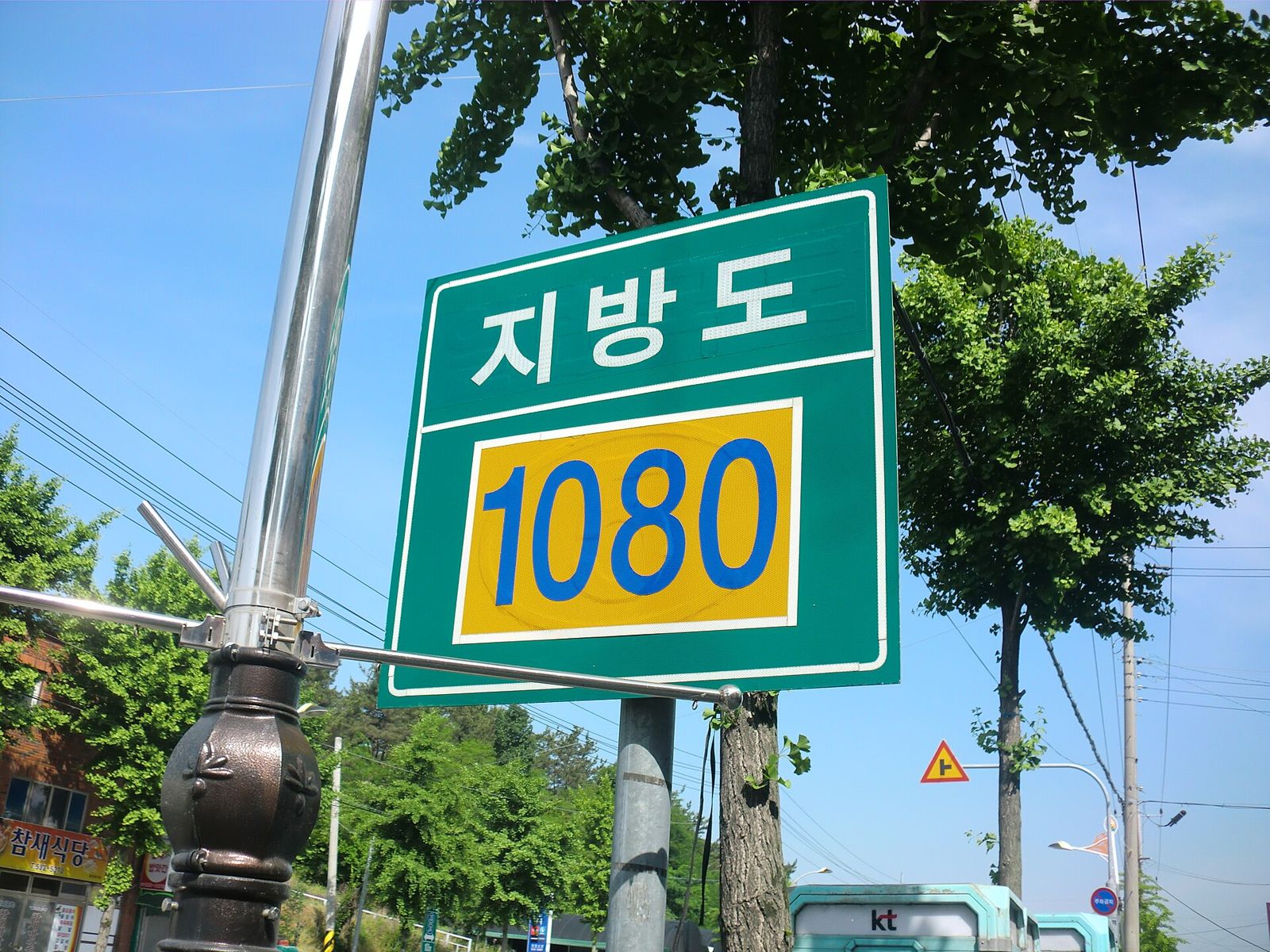
- Read real words, not just letters. Shop signs, subway station names and K-pop titles are perfect practice.
- Write each block by hand. Stroke order is generally top to bottom, left to right.
- Don't rely on romanization for long. It's a crutch that can hide the real sounds, especially ㅓ and ㅡ.
Korean you can use
| Korean | Romanization | Meaning |
|---|---|---|
| 한글 | hangeul | Korean alphabet |
| 자음 | jaeum | consonant |
| 모음 | moeum | vowel |
| 받침 | batchim | final consonant |
| 읽다 | ikda | to read |
| 이거 어떻게 읽어요? | igeo eotteoke ilgeoyo? | How do you read this? |
Once the blocks click, every Korean word you meet becomes something you can read aloud, and that's the real start of learning Korean.
 Bernard Gagnon / CC0 (Wikimedia Commons)
 Basile Morin / CC BY-SA 4.0 (Wikimedia Commons)
 Basile Morin / CC BY-SA 4.0 (Wikimedia Commons)